
- Track your orders
- Save your details for express checkout
×
Registrant Details
Use this window to add all the registrants you wish to register on behalf of. If you want to attend the course also, ensure you add yourself as one of the registrants. Make sure you press "Save" after adding each new registrant.
Registrant 1
First name
Last Name
Email Address
Username ( if known )
NZLS Member or Associate Member?
1x Registrant
Navigating Trustee Disputes 2025 - On Demand
Published: 11-11-2025
CPD hours: 1.50
Excl GST
Non Member: $257.00
Law Society Member: $178.00
Package includes:
On Demand Module | Electronic booklet | PowerPoint Presentation
Note: Access to the online files is via your "My CPD" page. If you would like to purchase multiple packages, please contact us here.
On Demand Module
Presentation time: 90 minutesThis module will be a practical guide exploring the challenges faced by independent trustees of family trusts. It will cover the trustee’s role in disputes, key duties, potential liabilities, and available options. It will also address the critical question – what role should an independent trustee play in the context of a family dispute?
Other topics will include:
- How to stay independent and administer a trust in a family conflict
- When to seek legal advice
- Who pays the costs
- How to stay financially protected
- Exit strategies.
Learning objectives
By completing this module you will:
- Have deeper understanding of the role and duties of an independent trustee in a family trust.
- Be more confident carrying out that role.
Electronic paper
Authors: Elizabeth Heaney, Liam McNeely
Published: 11 November 2025
Pages: 19
Introduction
It is estimated that there are between 300,000 and 500,000 trusts in Aotearoa, New Zealand.1 Anecdotally, the authors understand that a significant number of these are family trusts. There are many different structures that these family trusts may take. In general terms, they are commonly discretionary trusts, settled by parents for the benefit of themselves and other family-members, such as their children or grandchildren.
Frequently, the trustees of these family trusts will be the settlors/parents and, often, an additional so-called “independent trustee”.
In this paper, we use the term “independent trustee” broadly to capture any trustee who does not have a beneficial interest in the trust assets.2 Accordingly, an independent trustee may be the settlor’s lawyer or accountant (or a trust company/special purpose vehicle set up by the family’s lawyer or accountant to serve that function), a professional trustee company or a family friend.
In general terms, a key practical benefit of appointing an independent trustee is that they should provide a more impartial and objective perspective when it comes to trustee decision-making. They may also come to the role armed with certain professional skills and experience, depending on who they are and the reasons for their appointment. The rationale for their appointment can often be contrasted with the position of a settlor-trustee and other types of family-member trustees, who may only be in the role because they are a family member. In addition, these family-member trustees may be a beneficiary of the trust or, at the very least, form part of the fabric of the broader family dynamic.
The purpose of this paper is to explore some of the key challenges faced by independent trustees of family trusts. In particular, we examine the risks that independent trustees may face in the context of family trust disputes and the practical options and steps that may be available for navigating and minimising those risks.
PowerPoint Presentation
These are the slides included in the presentation.
 |
 |
|
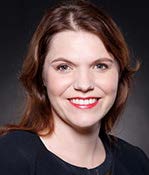
| Elizabeth Heaney Tompkins Wake Auckland |
Liam McNeely Mills Lane Chambers Auckland |
Questions?
You might also be interested in ...
Will Drafting - today's challenging issues 2025 - On Demand
Publication Date: 23-07-2025Authors: Vicki Ammundsen, Theresa Donnelly
CPD Hours: 1.50
Intestacy Made Easy 2025 - On Demand
Publication Date: 03-04-2025Authors: Theresa Donnelly, Henry Stokes
CPD Hours: 2.00